

Those who inspire –
Georg Mengel
Rooted in her own approach to craftsmanship, aesthetics and design, Line Hallberg seeks to shed light on some of the inspiring pioneers who help shape the world of design with their visionary point-of-view. Those who, silent but surely, define our design history, transform their passion into stories that celebrate curiosity and history – those whom Line Hallberg herself is inspired by.
“With this portrait series, I seek to open the door into the marvellous world of connectivity that we become the co-creators of when we take upon and perfect a historic craft. To honour and evolve the work of past generations and highlight the value of what taking your time, making an effort and creating with purpose and meaning truly looks like, working towards the sublime. Like an ode to those who wholeheartedly surrender to the process and worship the presence in art and design. As a goldsmith, I am a great admirer of those who dedicate their lives to evoke my fantasy and senses through their interpretation and materialisation of a crafts raison d’être” – Line Hallberg
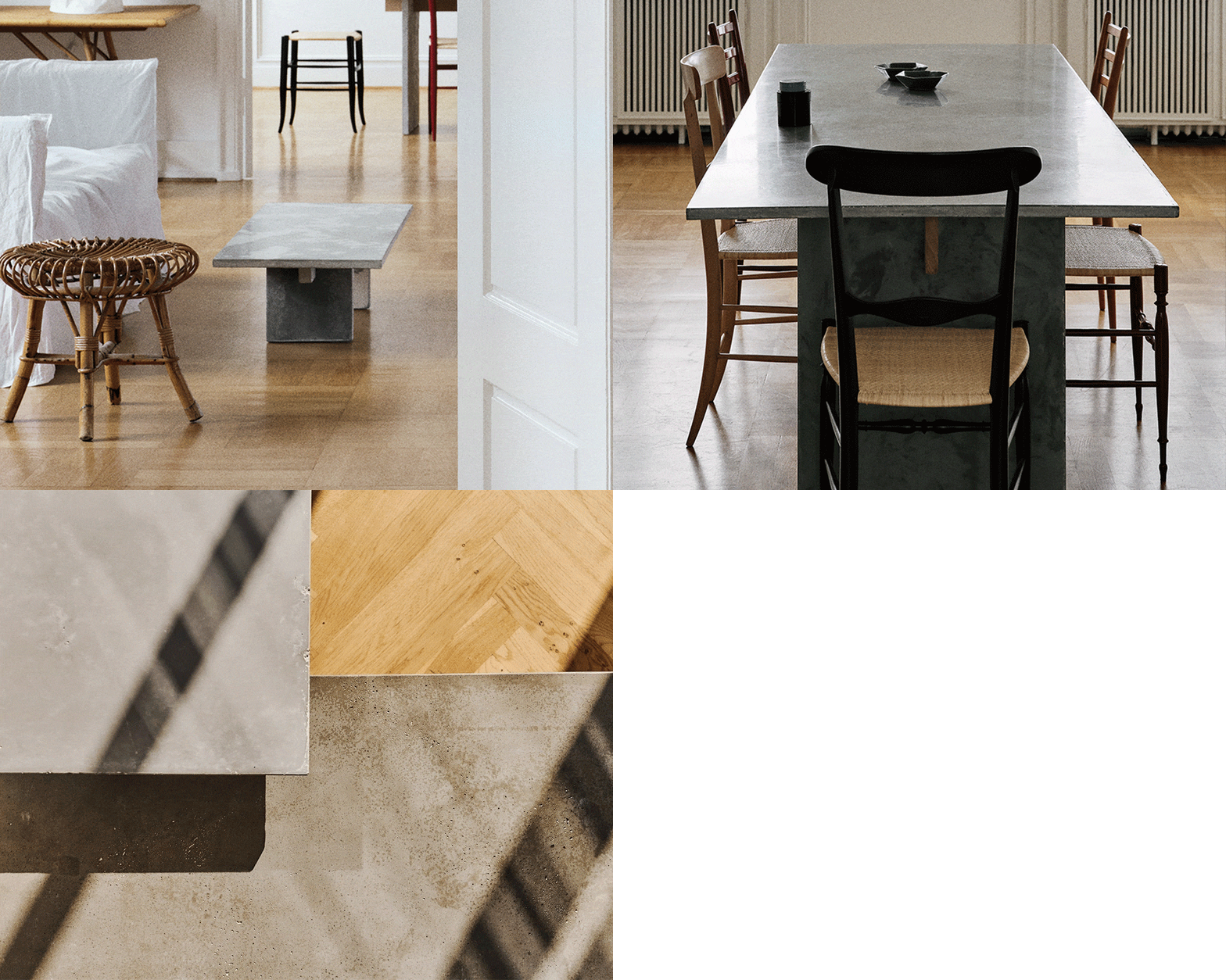
Photo: Mikkel Tjellesen & Fritz Buziek – the sculptural MENGEL Dining Table and Rectangular Coffee Table in the home of Line Hallberg.
As a goldsmith, craftsmanship, materiality and history not only pave the foundation of Line Hallberg’s work but are also elements she’s deeply drawn towards. Something, which becomes evidently clear when entering her home, where especially one furniture designer stands out – Georg Mengel.
Originally trained as an engineer with immense experience in the cement industry, Georg Mengel entered the furniture industry in 2022. After meticulously testing and crafting in his concrete workshop, Georg designed his very first furniture collection under the name MENGEL. A collection later to be showcased during Salone Satellite, at Salone Del Mobile in Milano in 2022, as well as Ark Journal’s first curated exhibition during 3 Days of Design in 2024. Exhibitions that very much highlight the inspiring and unique universe of MENGEL.
“The most captivating part of experiencing and living with the furniture of Georg is the simplicity of each design. The dimensions of the surfaces, elegantly crafted in concrete, create a playful expression that captures the structure of nature. I am deeply fascinated by the level of skills required to construct such substantial concrete surfaces without making a single crack or obtaining a dull look. In many ways, it resembles working with precious metals, as this also requires experience to transform a rigid material into a man-made shape.” – Line Hallberg

Photo: Fritz Buziek. Interior designer and engineer, Georg Mengel.
What does craftsmanship mean to you, and what excites you the most about creating furniture?
Craftsmanship is really important. Whether it’s a simple but well-crafted hexagonal handle on a chef’s knife – as long as it’s honest work that respects the materials and their functionality.
Balance, relevance and contribution are the three words that drive me and my work. It’s important to create with purpose and there should always be a clear and necessary need. That’s the focal point of my approach. This can manifest through small iterations of known idioms that add a new experience or understanding to an existing design. It can also be through the use of new techniques, materials or tools. What’s most important is to create a balance between function, intention, execution and choice of material. Within that crossroad, opportunities arise to surprise and disrupt the current understanding of a product or material.
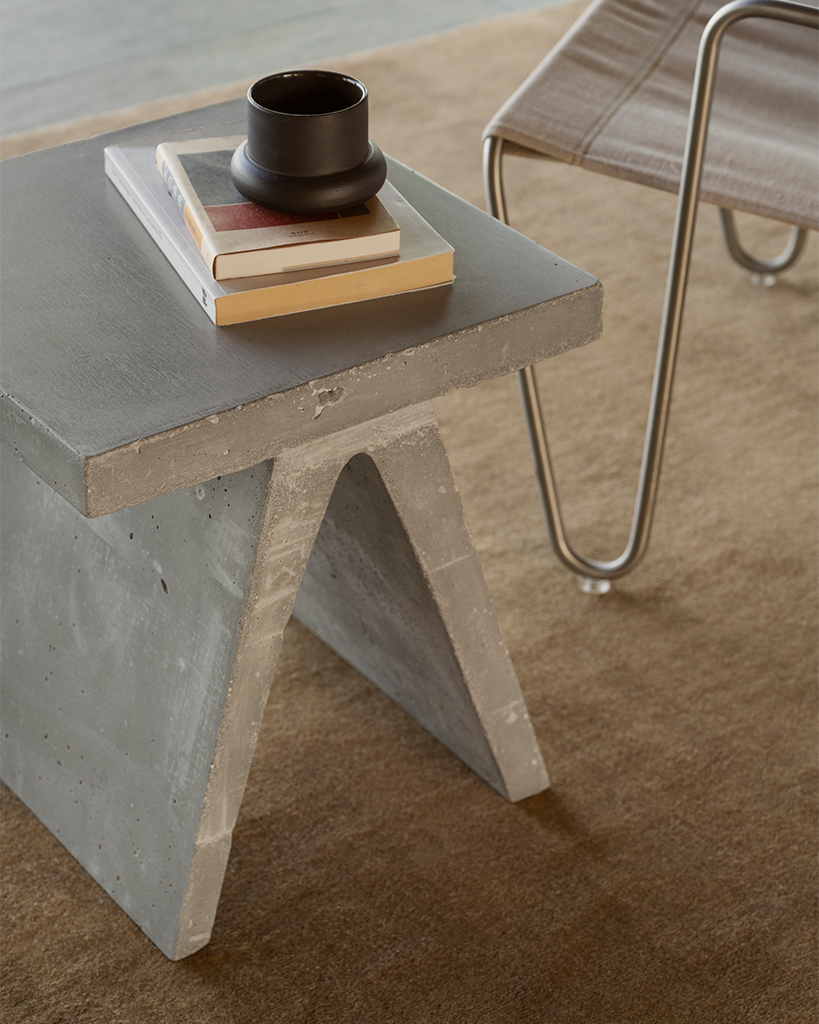
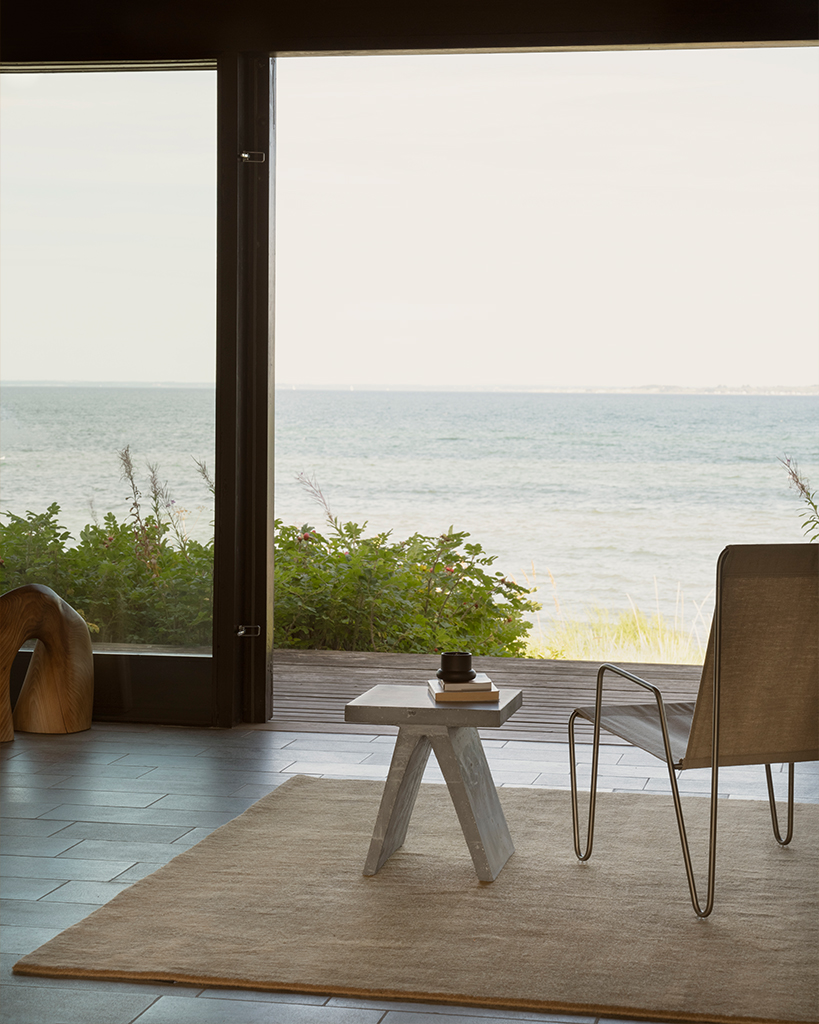
Photo: Sofie Staunsager. The three pillars of Georg Mengel – balance, relevance and contribution exemplified through the elegant 01 Side Table that effortlessly unifies seating and storage while referencing the idiom of ancient Japanese wooden chairs.
Describe your work process from sketch to finalised product?
Usually, I approach my design process from multiple angles. There can be many iterations from the initial idea that occur from a request, a need or an obstacle, to the finalised prototype. Typically, an idea is formed with several possible solutions to the structural problems, the design contains. I regard these as opportunities to challenge and play with the general perception of the chosen material or product. Once the fundamental functions have been figured out the aesthetics can be optimized. This interaction between materials, function, solutions and aesthetics is absolutely central and a big part of what drives the process. What happens if we use a different material? Or choose another construction? What if we demand more functionality or less?
In general, I like to work with obstacles. It’s not something I’ve necessarily been ultra-aware of but it’s been a consequence of understanding that I wanted something specific – like when designing a dining table in large dimensions that encompasses a level of calmness, sturdiness and aesthetics, that creates a safe and welcoming atmosphere while still appearing light, simple and elegant. It challenges our understanding of what concrete can do as a material and it’s this combination of the elements, and the balance between them that makes the design.
When did your interest in aesthetics, materiality and craftsmanship begin, and how did the idea of your first furniture come about?
Ever since I was a child, I have always been interested in design and architecture. My mother wanted to be an architect and therefore, has a great interest in the field, which definitely rubbed off on me. In my childhood home, there are many classic, but also very old, pieces of furniture, that allow for exploring, learning and understanding the constructions, which is something, that always fascinated me. In the same way, I have also been making furniture since I was a child – tables, stools, etc.
My first piece of furniture is the MENGEL Dining Table (DT) and Coffee Table (CT) in the original sizes; DT240 – 2.4m x 0.9m and CT120 1.2m x 1.2m. They were created in unison and from a place of knowledge of materials and a desire to create something unique that was equally relevant and interesting.
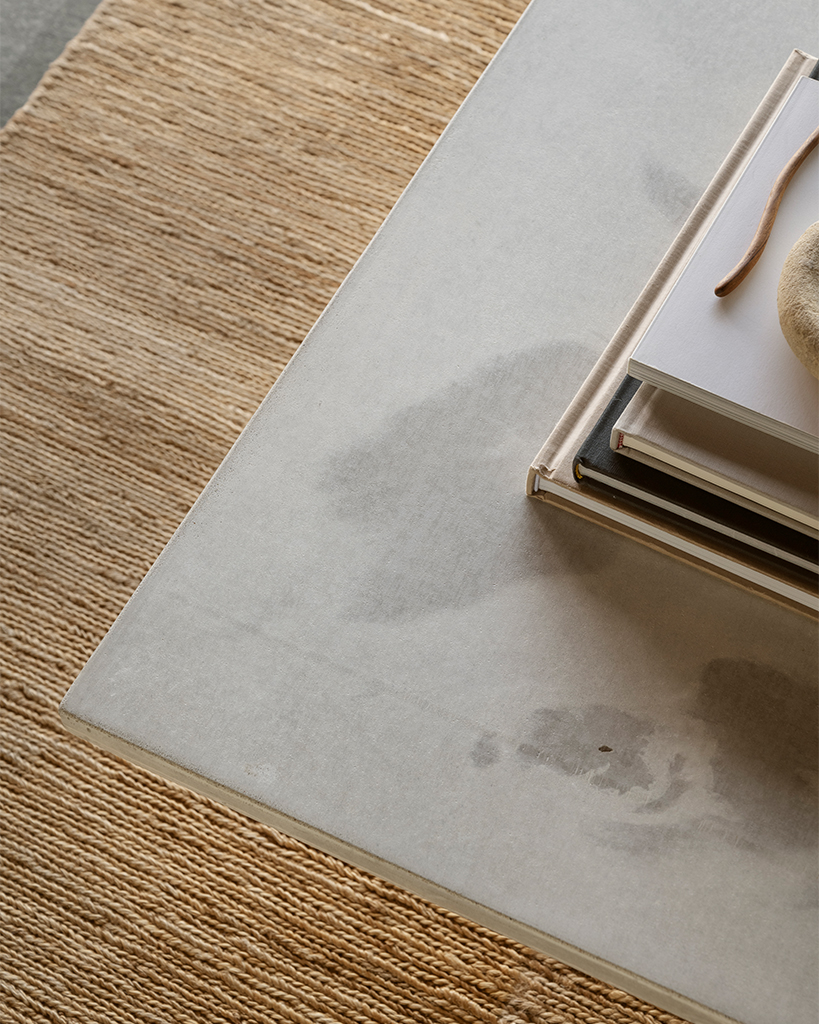
Photo: Sofie Staunsager. The sharp and raw MENGEL Coffee Table delicately balances subtle lightness and solid craftsmanship.
What has the transition from an engineer to a furniture designer been like, and how did you unify the two crafts?
Fantastic! There are so many reciprocal aspects which make so much sense. To work with a craft again has been a pleasure and there is just something incredibly satisfying about that process. As an engineer, I have an in-depth knowledge of cement and cement production which has opened my eyes to the many possibilities of concrete when using new techniques. Apart from the Brutalist movement, concrete is rarely seen in a domestic setting. It is exciting to be able to start a conversation about materials, focus on what surrounds us and see it from a new perspective. We are currently exploring e.g. aluminium, and are continuously working with wood and have recently launched products in solid wood, e.g. our MA Stool.
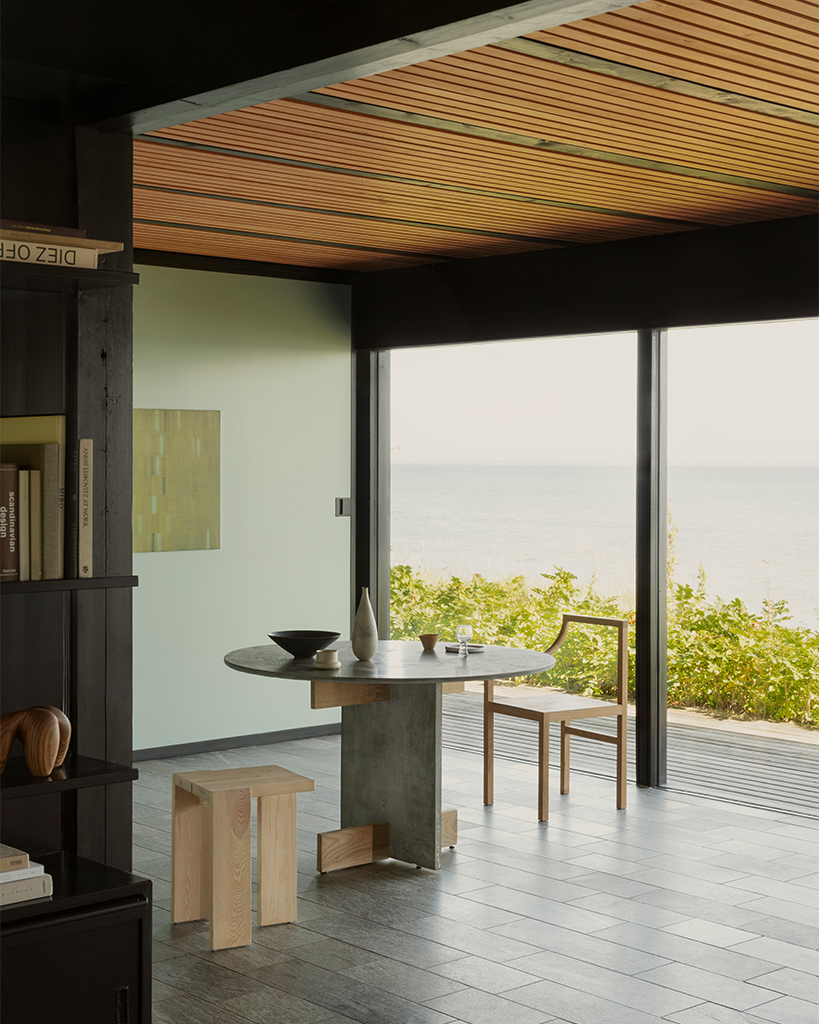
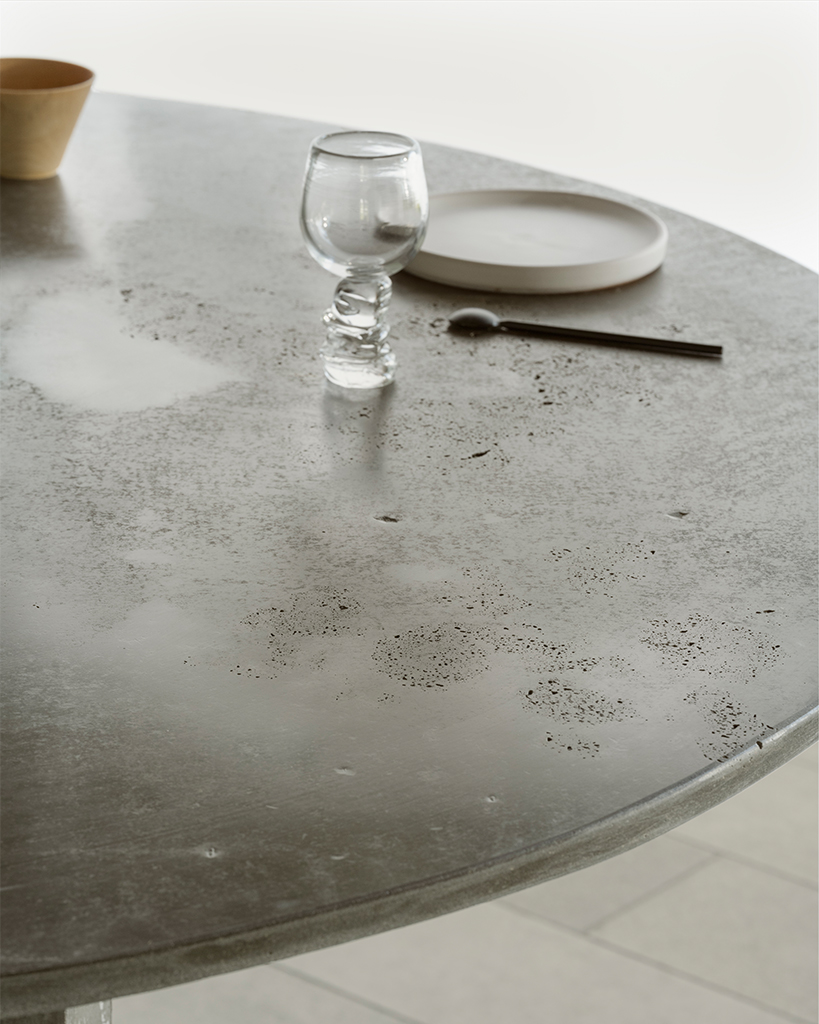
Photo: Sofie Staunsager. The exquisite MENGEL MA Stool in pine wood paired with the contrasting Round Table in fibre reinforced concrete and oak.
Do you have a favourite piece of furniture from your collection?
That’s a tough question. I love all the furniture I have made, but I am especially fond of the large Coffee Table. There’s something unique about its size and the ability to keep a humble appearance that does not make too much noise or shout for attention. It is a quality I am really satisfied with and proud of.
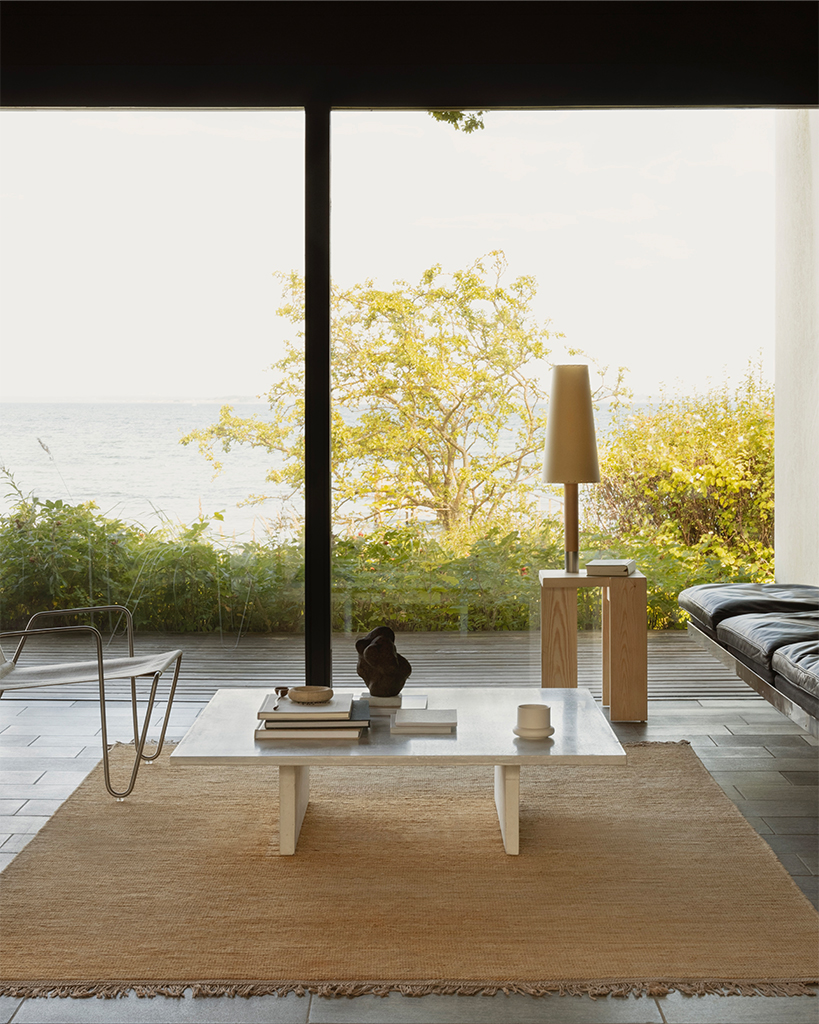
Photo: Sofie Staunsager. The classic MENGEL Coffee Table made of fibre reinforced concrete and oak.
How does Copenhagen influence your craft/the design of MENGEL?
Copenhagen has had a great influence, as It’s the city I’m from and the place I’ve looked towards the most. I mostly draw inspiration from the many iconic buildings and their qualities as these are something I look for in my work. They manifest as references, but also a language and a sense of belonging and being home.
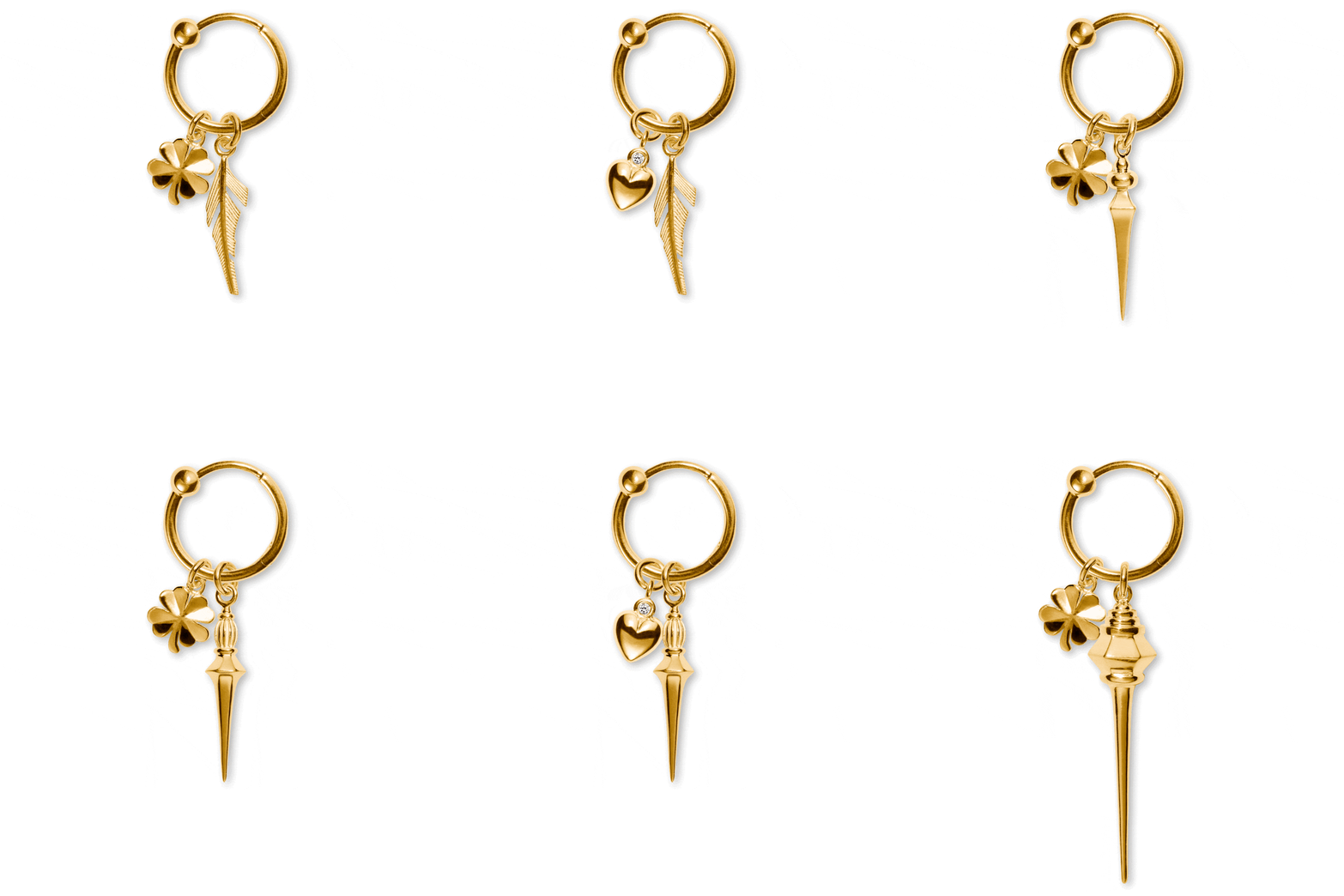
The many combinations of pendants and hoops from Line Hallberg’s iconic collection FRAGMENTS OF COPENHAGEN. A collection that, similar to the work of Georg Mengel, is inspired by the architectural history of Copenhagen.
When were you introduced to Line Hallberg and her craft?
Line is a jewellery designer with a solid name of her own and has been so for many years. I have known LINE&JO for many years and have great respect for Line’s work. Line works with materiality, sensibility and structure in a way that appeals to me a lot. The balance of emphasising the fine and exceptional craftsmanship behind – it is beautiful, honest, refined and raw.
Is there something special you seek to pass on to future generations and their approach to design and craftsmanship?
It’s cliché, but you must get some dirt under your nails and try things out. Too many people limit themselves by wishes and ambitions that end up paralysing them, so, take some chances, try things out and keep learning!
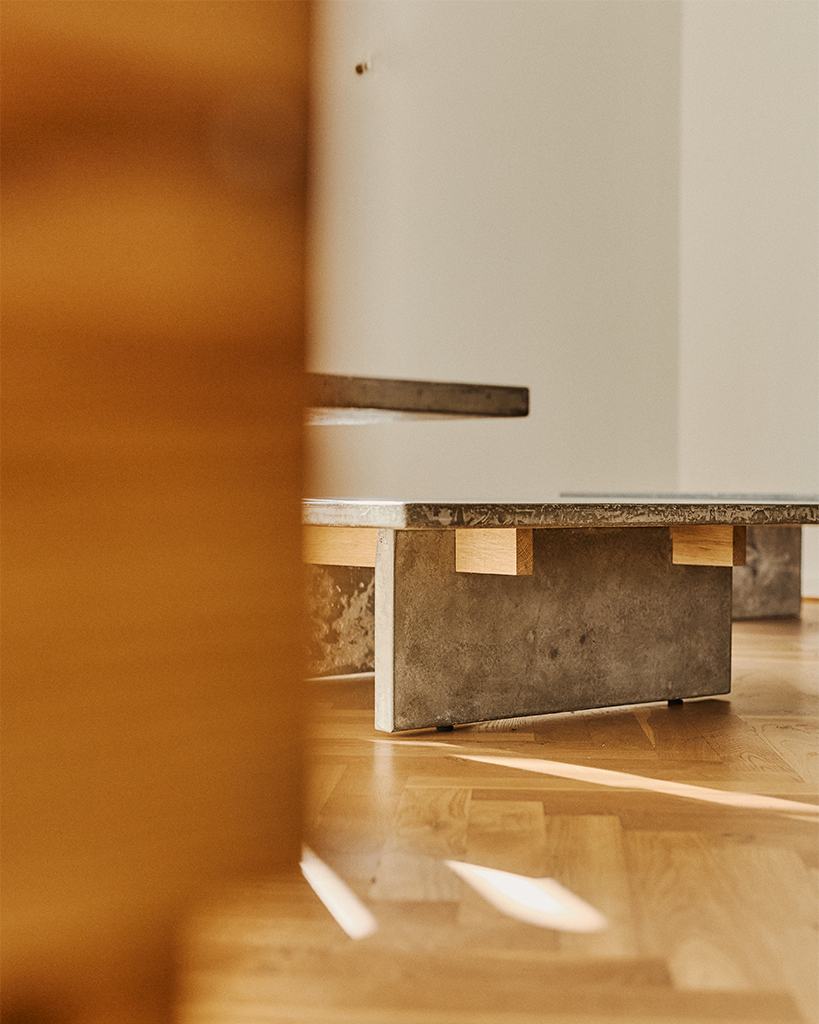

Photo: Fritz Buziek. With respect for craftsmanship, and a curiosity towards materials, techniques and history, Georg Mengel crafts furniture made to surpass time.
3 brands, Georg loves to follow
- Takuwoodcraft – I love to get inspired by their way of working with wood. Especially when it comes to assemblings, techniques and compositions.
- Enzo Mari
- Tadao Ando
Revisit the EUROWOMAN coverage of Line Hallberg’s home and experience the unique furniture of Georg Mengel.


